The Geopolitical Divide in AI
In 2026, the notion that technology knows no borders seems more like a cruel joke than a reality. Recently, the AI community has been shaken by strict access restrictions imposed by major AI platforms on users from mainland China.
Many developers eagerly opened Claude, only to be met with a frustrating identity verification request requiring original documents like passports or driver’s licenses, along with real-time facial recognition. Disturbingly, the system automatically rejects documents issued in mainland China.
Social media is flooded with complaints. Some users went to great lengths to find overseas friends to assist with verification, only to have their accounts banned overnight. Others, who had studied abroad for years, found themselves locked out simply because they registered with a domestic phone number.
In the latter half of 2025 alone, Anthropic reportedly banned over 1.45 million accounts suspected of being linked to Chinese users under the guise of compliance. Behind these numbers are countless Chinese AI developers and tech enthusiasts who have invested significant time and money.
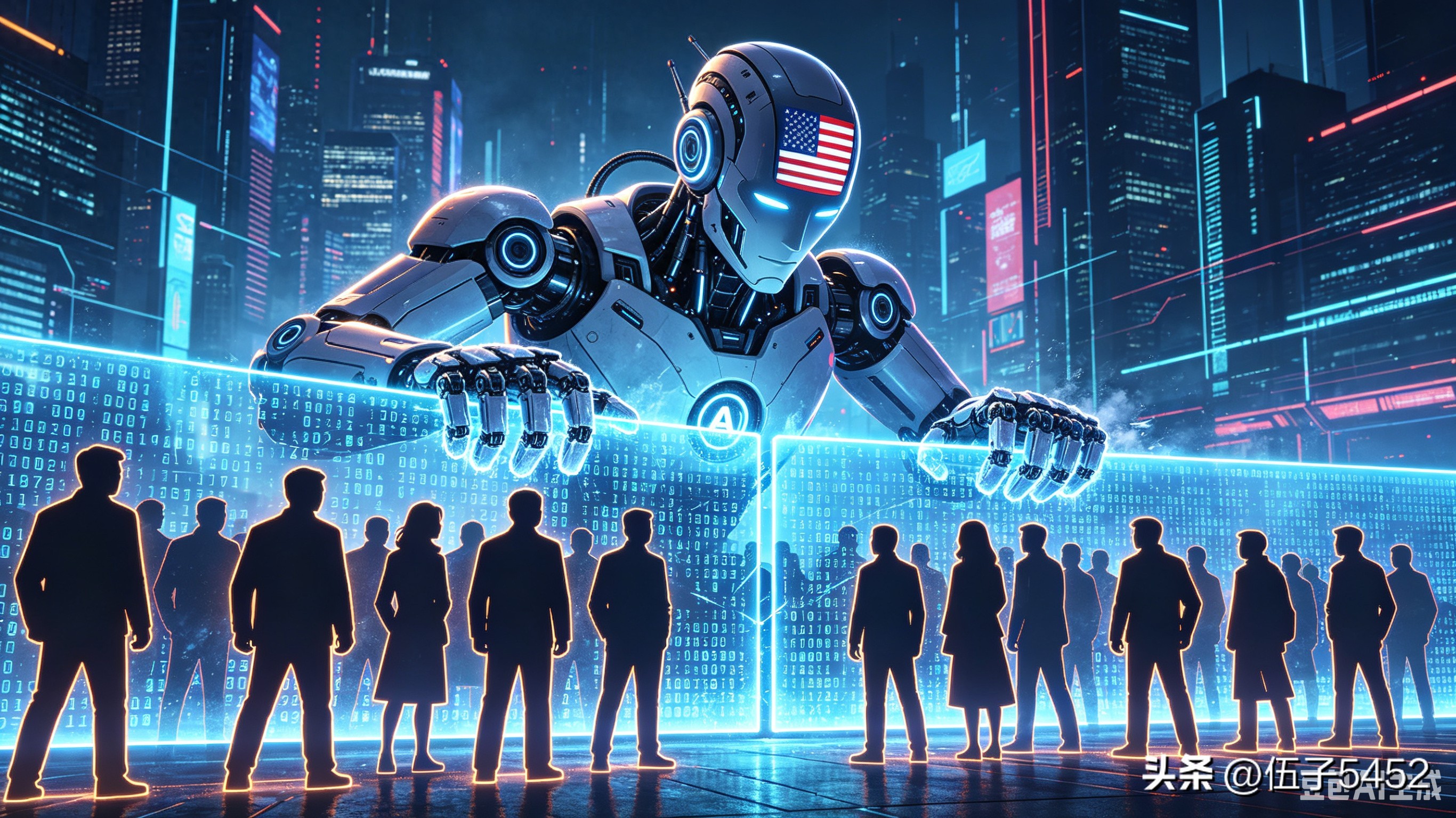
Claude is not alone in this practice. OpenAI’s ChatGPT outright denies access to mainland IPs, while Google’s Gemini is completely unavailable in mainland China. On one side, U.S. AI companies maintain strict barriers against Chinese users, while on the other, Chinese AI models are eagerly welcoming global users, even seeking to enter capital markets. What geopolitical and economic logic lies behind this divide?
The Escalating Wave of Bans: Who is Closing the Door?
Let’s take a closer look at which foreign AI applications are blocking Chinese users.
Claude—The Strictest Ban
Since March of this year, numerous users have reported their Claude Code accounts being banned. By mid-April, identity verification requirements escalated, mandating users to present original documents—no photocopies or screenshots allowed, and real-time facial verification was required.
In September 2025, Anthropic updated its terms of service to prohibit companies with over 50% Chinese ownership from using Claude services, regardless of where they operate. This means that even if a company is registered in the Cayman Islands, it can still be banned if deemed to have Chinese ownership. Hong Kong and Macau are also included in this sweeping ban.
ChatGPT—A Softer Yet Firm Ban
Compared to Claude’s extreme measures, ChatGPT appears more lenient. OpenAI claims to be open to 161 countries and regions, but China has never been on that list. When the system detects access from mainland China, it simply returns a message stating that the service is not supported in that region. However, Hong Kong and Macau are still within the service range.
Google Gemini—Total Ban
Google’s Gemini is also unavailable in mainland China, Hong Kong, and Macau. Its official web services, apps, and AI features in Chrome do not function in these regions. Even if your Google account is registered in China, these features won’t be visible.
Midjourney, Perplexity, and Others—General Restrictions
Feedback from developer communities indicates that mainstream AI applications like Midjourney and Perplexity also impose varying degrees of access restrictions on Chinese users, requiring overseas payment methods or simply stating that the service is unavailable in their region. ByteDance’s international product Cici has also set regional restrictions, making it unusable in both China and the U.S., reflecting the geopolitical pressures on commercial products.
In summary, the mainstream foreign AI applications that restrict Chinese users encompass nearly all core products from U.S.-based AI companies, covering everything from large model conversations to AI art and programming, effectively creating a comprehensive blockade.
China’s AI Goes Global: Why the Open Approach?
While U.S. AI companies enforce strict barriers against Chinese users, Chinese AI firms are actively expanding globally.
Chinese AI not only welcomes overseas users but actively seeks to expand abroad.
MiniMax, a Shanghai-based large model unicorn, successfully entered the capital market in early 2026, showing impressive market performance. Its success is largely attributed to its strong performance in overseas markets, where its models compete effectively with GPT-4 in mathematics and coding capabilities.
The GLM series from Zhiyuan AI has recently gained popularity among U.S. developers, and Chinese manufacturers have captured significant market share on global model routing platforms like OpenRouter due to performance and cost advantages.
Even more dramatically, a U.S. AI programming startup, Cursor, was found to have incorporated a self-developed model, Composer-1, which unexpectedly switched to Chinese during a run. Industry insiders speculate that the model may have been influenced by Chinese manufacturers like Zhiyuan GLM. This unexpected twist highlights the complexities of the AI landscape.
Kuaishou is also rumored to be splitting its “Keli AI” business, aiming for a high valuation. If successful, another Chinese AI company will enter the international capital market.
Moreover, Chinese AI’s performance in overseas markets is not limited to just IPOs: in 2025, China’s AI model usage reached more than twice that of the U.S. The performance gap between leading AI models from both countries has narrowed, and China’s advantages in application layers are becoming increasingly evident.
In fact, Chinese open-source models are breaking through in the U.S. market, with downloads from Chinese models on Hugging Face surpassing certain open-source models from Meta.
With such a stark contrast—one side closing doors and the other opening them—it is clear that this is not merely a difference in commercial strategy but reflects the deeper geopolitical and economic logic of both nations in the AI arena.
Behind the Bans: Policy Pressure as a Sword of Damocles
To understand the ban actions of U.S. AI companies, one must look beyond commercial logic and seek answers from macro policy perspectives.
1. U.S. Export Controls Intensify
At the forefront is the U.S. export control system. In April 2026, the U.S. House of Representatives’ “U.S.-China Strategic Competition Special Committee” issued a stringent AI review report, urging the passage of the “Remote Access Security Act” to close loopholes that allow China to access computing power through the cloud.
Google, OpenAI, and Anthropic are all U.S. entities and must comply with the U.S. Treasury Department’s Office of Foreign Assets Control (OFAC) regulations, which explicitly prohibit providing advanced AI services to countries of concern, including mainland China. For AI unicorns like Anthropic, compliance is not optional but a necessity.
2. Investment Restrictions Evolve from “Voluntary” to “Mandatory”
With the signing of the “Fiscal Year 2026 National Defense Authorization Act,” the U.S. has formally legislated foreign investment reviews. This means that U.S. tech companies expanding into the Chinese AI market face not only export control risks but could also be deemed as “covert investment,” triggering legal consequences. From a compliance and risk-avoidance perspective, proactively banning Chinese users has become a “safe card” for U.S. AI companies.
3. The “50% Rule” Closes Off Workarounds
The U.S. has further strengthened the “50% rule”: if a Chinese shareholder listed on the entity list directly or indirectly holds 50% or more of a non-U.S. company, that company will automatically face the same restrictions. This explains why Anthropic has expanded its ban to include companies with over 50% Chinese ownership, regardless of their operational location.
In other words, the U.S. has built a “technological Berlin Wall,” with AI being the latest brick in this wall.
Deeper Reasons: Security Fears, Hegemonic Anxiety, and Commercial Interests
1. The Real Intent Behind “National Security” Narratives
On the surface, it’s about “national security,” but fundamentally, it’s about maintaining technological hegemony and curbing China’s technological rise. AI is viewed as the core driving force of the new technological revolution, making it a focal point of competition. Ensuring U.S. dominance in AI has become a rare consensus among both parties in Washington.
2. Rapid Progress of Chinese AI Raises U.S. Alarm
Another reason behind the bans is the rapid advancement of Chinese AI. Reports from think tanks like Rand Corporation indicate that the performance gap between AI models from both countries has nearly closed, with China holding a 40% to 50% cost advantage. This rapid catch-up has made Silicon Valley giants uneasy. Restricting access for Chinese users not only limits their ability to leverage U.S. advanced AI for technological accumulation but also weakens their dependency on the U.S. technology ecosystem. From a strategic perspective, this is a form of “cutting off the supply.”
3. The Tug of War Between Commercial Interests and Political Demands
For companies like Anthropic and OpenAI, Chinese users do hold commercial value. However, with rising compliance costs, an “all-or-nothing” ban has become the least risky option. After all, the 1.45 million banned accounts involved many users accessing services through unofficial channels. In these situations, implementing a blanket ban to mitigate risks is more a rational choice than a subjective anti-China stance.
Why Does Chinese AI Welcome All?
Understanding the logic behind U.S. AI bans makes the reverse choice of Chinese AI clear.
1. Survival Needs: The Global Market is Crucial for Chinese AI
Chinese AI companies are expanding overseas primarily because domestic market competition is too fierce. With a crowded market and limited capacity, going global is an inevitable choice for survival and growth.
What is the core competitive advantage of Chinese AI in overseas markets? Low cost and high efficiency. The U.S. market lacks high-quality, continuously updated open-source models, while Chinese manufacturers excel in this area. When U.S. AI services are priced high, Chinese companies offer more cost-effective alternatives.
2. Technological Confidence: Not Afraid of “Reverse Technology Leakage”
While the U.S. fears that China will use American AI to develop its technology, China is not worried about U.S. users utilizing its large models. In terms of model performance, leading Chinese models can compete with top U.S. products. This technological confidence is also reflected in the fact that Chinese AI has built an independent technological system, no longer reliant on foreign technologies. Opening up for global use allows for the acquisition of more user data and application feedback, accelerating technological iteration—a positive feedback loop.
3. Strategic Game: Using Openness to Counter Blockades
The U.S. builds walls while China opens doors. This is a strategic game in itself. As the U.S. attempts to encircle and block China in the AI field, Chinese AI companies are serving users globally. This differentiated expansion path—winning global market share through openness—is not just a commercial logic but a strategic choice.
4. Capital Needs: Listing in the U.S. or Hong Kong Remains an Important Option
The high valuations of tech stocks in international capital markets continue to attract significant interest. Whether it’s MiniMax’s listing on the Hong Kong stock exchange or Kuaishou’s plans to spin off Keli AI, it indicates that Chinese AI still has aspirations in international capital markets.
AI Knows No Borders, But Competition Has Stances
From Claude’s sweeping bans to ChatGPT’s IP restrictions, and the U.S. government’s layered legislative limits on AI investments and exports, all point to a stark reality: AI technology is being deeply politicized. Once regarded as a “global public good,” artificial intelligence is increasingly being framed within the context of bipolar confrontation, becoming yet another tool in geopolitical games.
However, China’s response is not passive. On one hand, driven by companies like DeepSeek and Zhiyuan AI, performance has reached a level where it can compete with U.S. giants; on the other hand, Chinese AI is embracing the global market with a more open attitude. While the U.S. legislates barriers, China is leveraging international opportunities—breaking through geopolitical barriers is not only a matter of political confrontation but also a testament to technological and market strength.
Of course, the open attitude of Chinese AI is not without costs. Technological expansion also faces regulatory pressures and geopolitical risks. The inability to use ByteDance’s Cici in both China and the U.S. is a prime example. Additionally, U.S. export restrictions on Chinese AI chips highlight that an open stance cannot completely avoid the impacts of geopolitical conflicts.
AI may change the world, but it may ultimately not change one fact: the essence of technological competition is the competition of comprehensive national strength between countries.
As you ponder these issues, you might be considering several questions:
- Will Chinese users still be able to access foreign AI in the future?
- Will the path of Chinese AI going global be smooth?
- In this AI competition, who will ultimately prevail?
In the short term, U.S. restrictions are unlikely to ease, and China’s global expansion will not stop; in the long term, whoever can truly bring AI technology to more people will win both users and the future.
Perhaps as we see it: when Claude asks for your passport and facial verification, you might no longer need it. Because Chinese AI has already taken the stage on the world platform.
Comments
Discussion is powered by Giscus (GitHub Discussions). Add
repo,repoID,category, andcategoryIDunder[params.comments.giscus]inhugo.tomlusing the values from the Giscus setup tool.